Re/ by REIDigital Product DesignConcept 2026
Re/ by REIDigital Product Design
Concept 2026

Product DesignerBased in Vancouver

Tyrone Dukay-Remulta
BackDigital Product DesignRe/ by REI
Project TypeRoleSFU Design CourseUX Designer, Project Manager
Team
3 Designers (Me)Tyrone Dukay-RemultaCheryl LeeDuc Ngo
3 ResearchersKelvin KwanSofia CividinJami Gandhi
WorkBrand IdentityProduct DesignPrototyping
ProjectRe/ by REIConcept2026

REI is the largest outdoor retailer in America, structured as a consumer cooperative providing outdoor gear to 26 million customers. My team designed a service to help busy outdoor enthusiasts get outside faster and worry less about the burden of owning, storing, and maintaining gear.

The problem
“All my equipment is just in the garage. It's everywhere. I clean it out sometimes, but it usually just sits there.”
Anonymous interviewee (2026)

Outdoor recreation is becoming more popular among young adults. According to the Outdoor Foundation, beginner participation for 18 to 24 year olds has increased by 6% in 2024. However, the average outdoor enthusiast has gone on 5 fewer trips compared to previous years.

What we learned
Insight 01Digging out and inspecting gear is a hassle.Taking gear out from storage is a hassle. User interviews revealed that intermediate to expert participants shared a reluctance to prepare and maintain stored gear.
Insight 02Planning trips and gear takes away relaxation time.Planning trips and preparing gear feels like added work. An interviewee hinted that they used to rely on their mom for planning camping trips.
Insight 03Home storage space is shrinking.1 in 3 Americans rent self-storage units because of lack of storage space at home, with sporting and outdoor gear being a top stored category. Source: Gatea (2025)
The outcome

A service that lets REI members get more out of the gear they own, without the burden of storing or maintaining it.

The constraints

I mapped the gaps and limitations the team had to work within, and made sure the final product addressed them rather than pretending they weren't there.

01REI's 194 stores physically can't hold member gear.
Design decisionBuild separate distribution centres near stores; stores handle only drop-off and pickup.
02Peer-to-peer rental of owned gear has to sit inside REI's existing rental policies and legal procedures.
Design decisionRoute disputes through the existing deposit and inspection system — misuse comes off the renter's deposit; loss pays the owner appraised value.
03Storage pricing has to be comparable to existing self-storage, or the value proposition collapses.
Design decisionPrice per square footage like self-storage; take a 10–15% cut of rental earnings to cover inspection and maintenance.
The design decisions

The work spanned four flows. These are the calls that shaped the product most, grouped by the flow they live in.
Storage
Owners select gear saved during onboarding, then they are guided through storage details, rental preferences, photos, pricing, and payout setup. Suggested pricing and preloaded information reduce decision fatigue, while the final contract and payment summary explain the next steps without confusion.
The calendar on an owner's profile shows who's renting each item, where and how long, alongside upcoming reservations, earnings, and a quick inspection overview. Owners can also block off dates from the calendar when they want an item for personal use, avoiding conflicts with renters.
Planning
REI Rental uses a member's purchase history, gear profile, and stored inventory to recommend activities they are already prepared for. Each option shows what they own and what is still missing. Users then confirm trip details, select stored gear, and add suggested rentals, simplifying planning from start to finish.
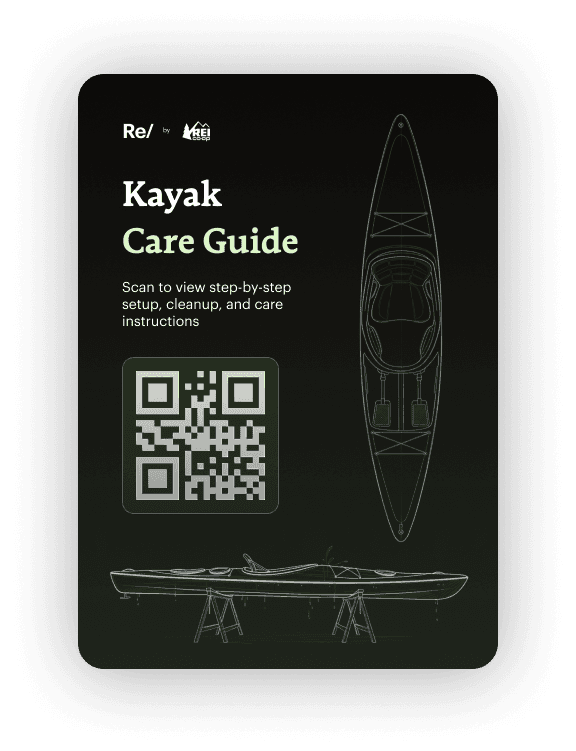
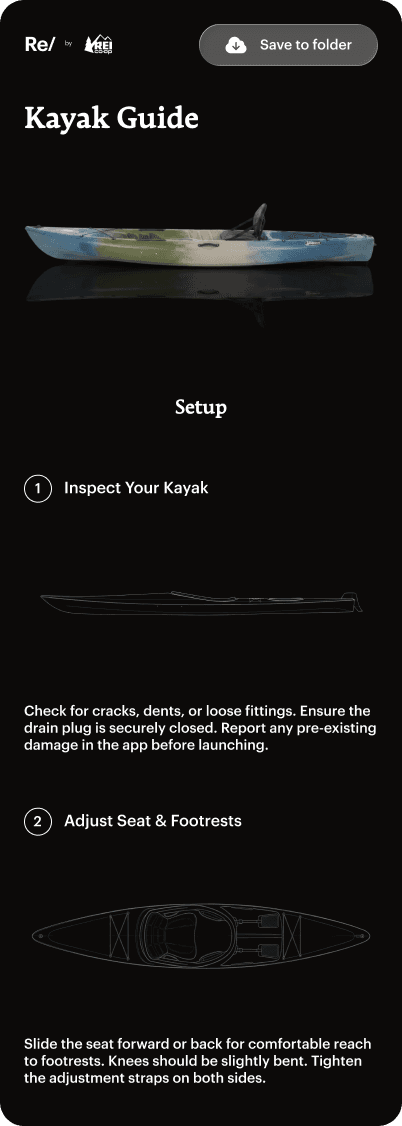
At pick-up each rented item comes with a physical QR code. It includes setup instructions, care information, safety reminders, and practical tips for using and packing the gear correctly. The guide can also be downloaded for offline access when needed.
Rental
Activities are presented as scannable cards while detailed information is progressively disclosed only after selection. This reduces cognitive load, supports faster decision making, and helps users compare trip options without overwhelming them with unnecessary information.
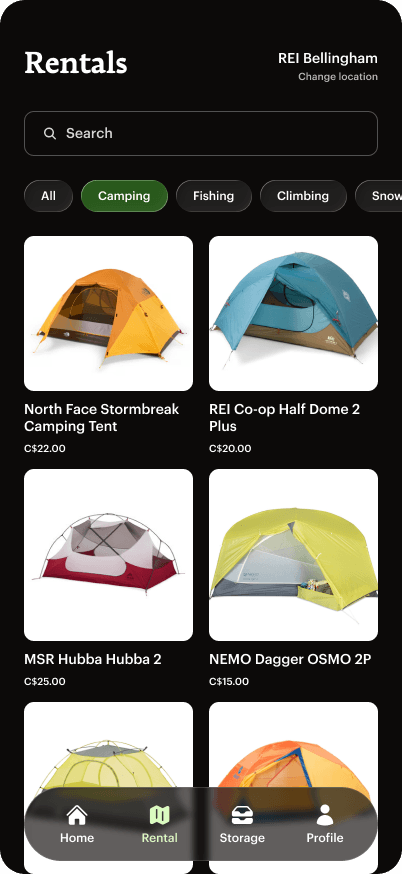
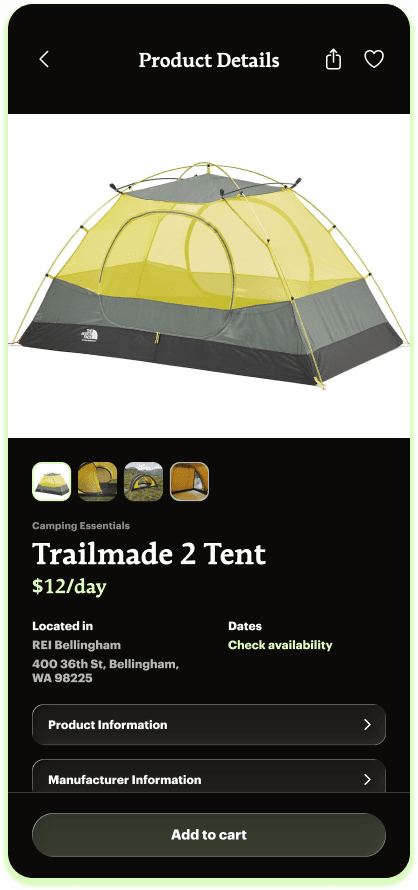
For members who only need to replace or supplement a few items, REI Rental also supports individual gear rentals. Users can browse equipment by category, compare pricing, availability, and access detailed product information before renting.
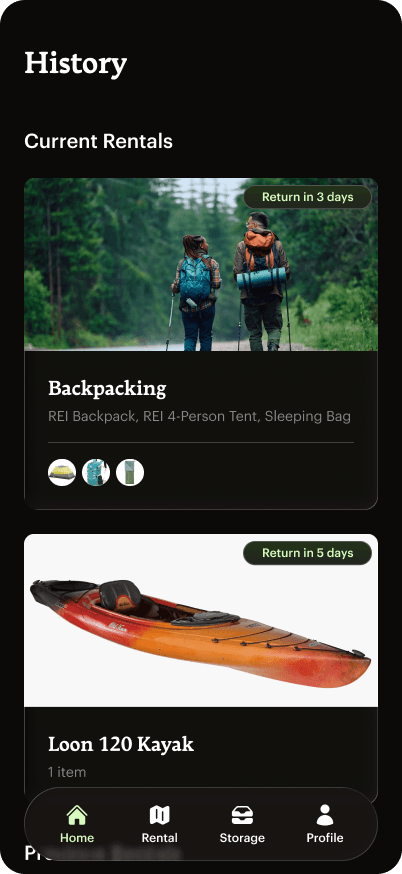
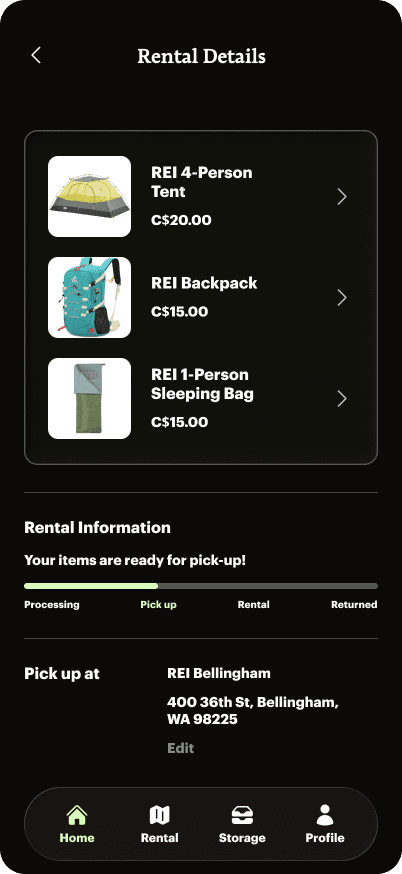
The History page gives users a clear overview of their current and past rentals in one place. Each rental card highlights the trip, return deadline, and rented items. The detail view provides pickup information, rental status, and a progress tracker.
Reflection

Designing for the extremes, not the perfect world.

As the lead designer, I realized that when designing a service, the ideal path will not always be achieved. Having to design for edge cases, even the extremes, really helped build the feasibility of the service, since I didn't want the team to just design for a perfect world.

Tyrone Dukay-Remulta
BackSelected case studiesWorks
Recent product design work, spanning research and service design, product interfaces, and brand systems.
Re/ by REIDigital Product Design
RallyDigital Product Design
MilesInterface Design
Tyrone Dukay-Remulta
Hi, I’m Tyrone.Ty.

I’m a designer that enjoys decomposing messy things into their real structure to help me find thoughtful ways to create meaningful experiences. By taking things into my chaotic brain, I get the pieces mapped to its parts refining it until it’s precise and intentional.

Outside of design, I love a good night out with friends (usually being the photographer), but most of the time, I am either driving my 86 around Vancouver doing random side quests (or looking at cars), dancing around at raves (if you can call it dancing), or eating food on a random 2am night (I love food).

LinkedInRead Resume
Scroll Down